In Praise of the Hobbit
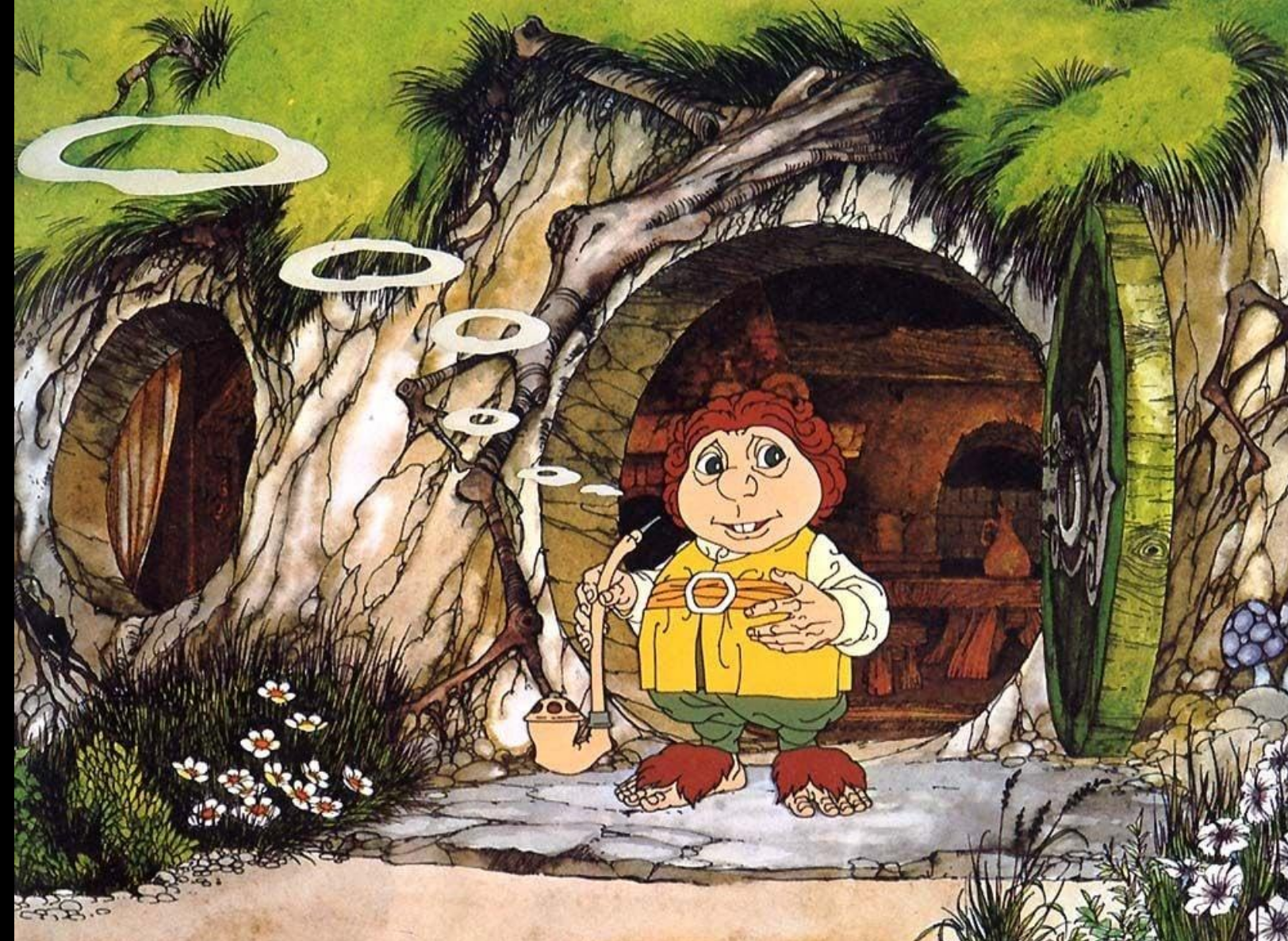
My first encounter with The Lord of the Rings was the 1977 Rankin/Bass adaptation of The Hobbit. I watched it on VHS via a tiny screen in a noisy minivan and yet I was completely transfixed. Though I had heard of dwarves, elves, and goblins before through video games and Saturday morning cartoons, I had yet to see anything quite so ellaborate as in Tolkien's creations. The Hobbit (both the book and the cartoon) fills me with the spirit of adventure. I feel it every time I take my kids to the park, when I go for a walk at work, and whenever I go camping in the woods. I remember Bilbo, Gandalf, and the dwarves leaving the Shire for the Lonely Mountain.
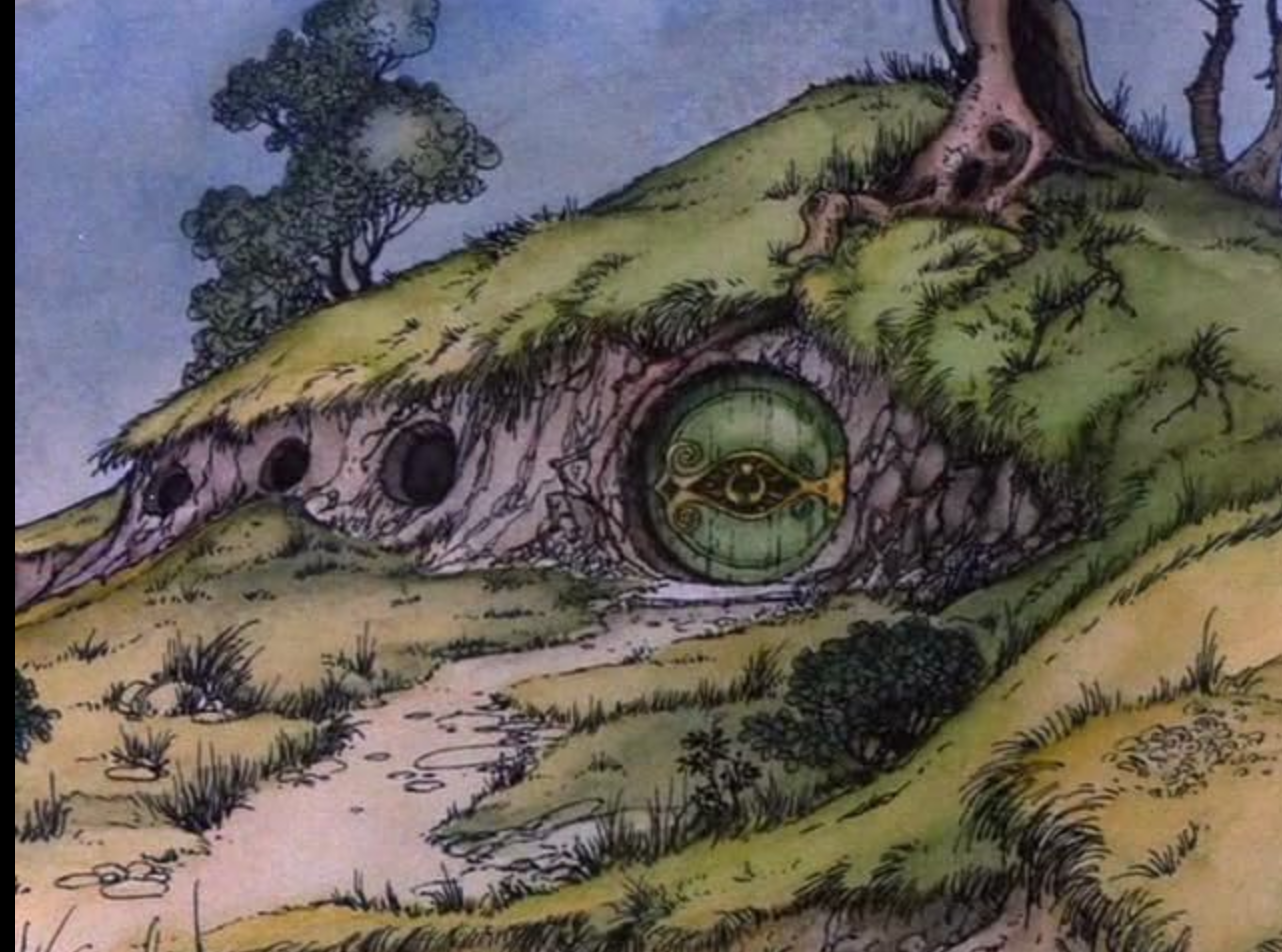
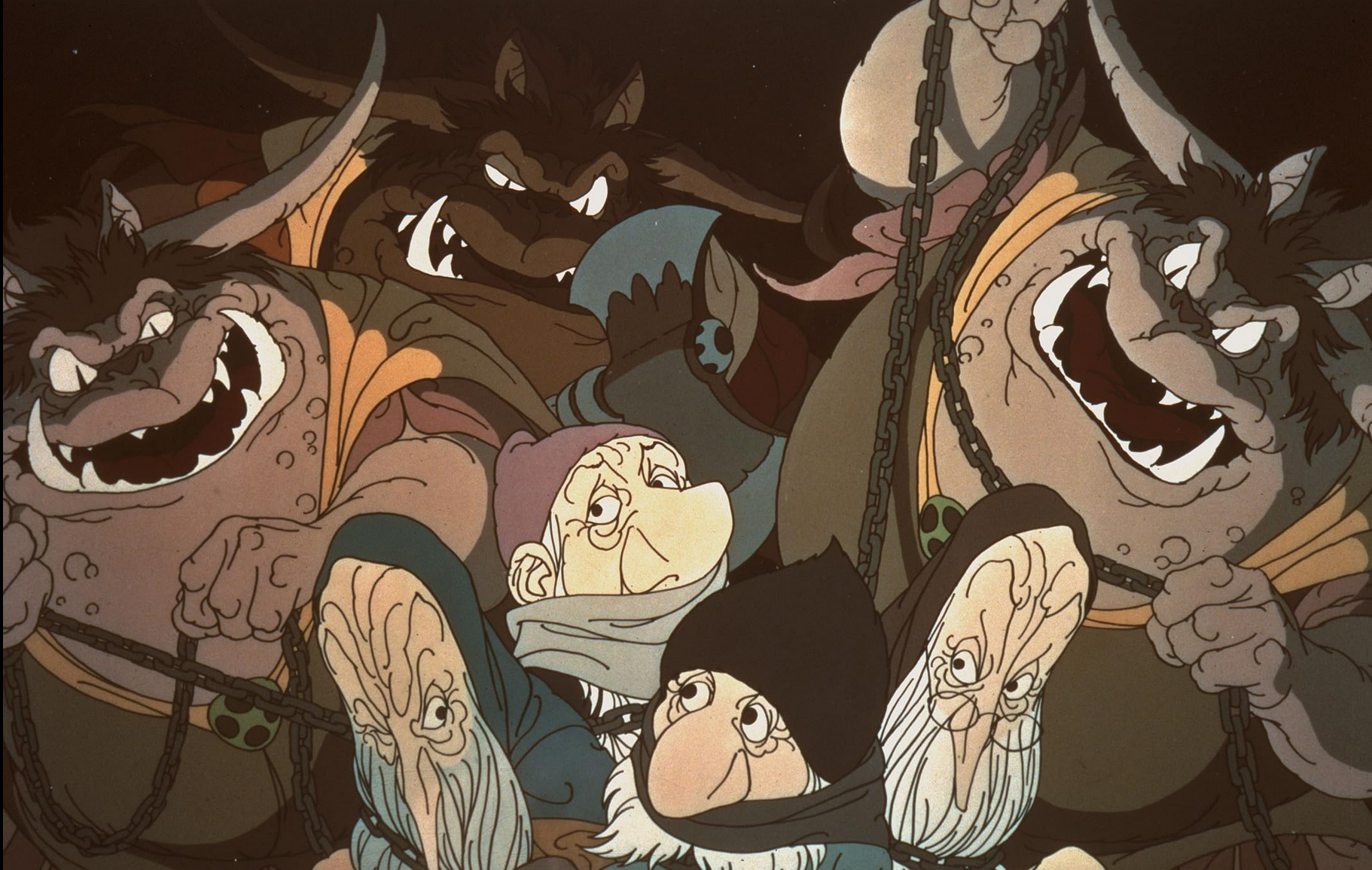
The background art of the 1977 film is undeniably beautiful but curiously the Rankin/Bass adaptation also takes several strange visual risks that pay off well. The goblins are childlike (why do they have cat ears?) yet threatening (why do they have two throats?). The dwarves are harder than their Disney cousins and yet more fitting for the world of child-centric make-believe than in the Jackson version. The Gandalf of the cartoon, like the Gandalf of the novel, successfully walks the line between comforting and strange and is a masterclass in character design.
The audio works well too and the pool of voice actors in The Hobbit is strangely deep with talent. Richard Boone is an excellent Smaug. John Huston is a surprisingly good Gandalf. Brother Theodore, who seems like an actor out of a different time period, is a superbly froggy Gollum. Songs and poetry are interlaced throughout the novel and the cartoon adapts this perfectly with a folksy, almost James Taylor-y vibe. The goblin songs are particularly memorable.
Importantly, the Rankin/Bass adaptation succeeds not just because of what it leaves in the film but what it leaves out. Beorn is cool, but a somewhat pointless distraction (here it is important to remember that literature and film are different mediums - film is enslaved to time, books are not). Other equally wise exclusions are Roac the raven, the cowardly Laketown mayor, the Arkenstone, and when Bilbo eats roasted rabbit in the Eagles' nest.
No cartoon is perfect, of course. Otto Preminger makes a cringe-ingly poor Elvenking. The elves have an embarassingly awkward visual design. There's some hilariously cheap lerpy movement when the Company overlooks Rivendell. There's bad compositing on the spiders. And even the psychedellic Gollum sequence starts to drag, just a bit, on repeat viewings (although I love his little boat and the forlorn coziness of his island cave).
But despite of (because of?) any obvious flaws, The Hobbit is a work of art. It is a rainy day movie, a sick day movie, something warm for the background while you wrap Christmas presents. It is a creatively animated adventure story that from my observations holds up just as well with children today as it once did for me in that minivan over thirty years go.
Rankin/Bass were the kings of low budget animation. Like Roger Corman, they cut whatever corners necessary to get the job done and deliver successful popular entertainment. The Hobbit is their Arkenstone: a near-perfect adaptation of a near-perfect piece of literature.